
Hubbard Urban Entomology Lab · NMSU
Research
The Hubbard Lab studies why pest management tools succeed or fail and how they can be improved for practical use. Our work connects insect behavior, resistance mechanisms, delivery, field validation, animal response, and Extension across urban and One Health entomology.
How we work
01 · Diagnose
Identify why a management tool is not performing as expected.
02 · Design
Build experiments that separate behavior, exposure, delivery, persistence, and physiological response.
03 · Validate
Test promising approaches in laboratory, semi-field, and field conditions.
04 · Translate
Turn evidence into practical tools, training, and management guidance.
01 / Insect behavior
Behavioral resistance and adaptation
Research question: What causes a pest management tool to fail when physiological susceptibility alone does not explain the outcome?
We examine choice, feeding, contact, avoidance, and other behaviors that influence whether an insect receives an effective exposure. Genetic and genomic approaches help us investigate mechanisms and population variation, while behavioral assays show how those processes are expressed during an insect's interaction with a control tool.
Why it matters: Resistance management is stronger when it accounts for what insects do before, during, and after exposure. Understanding those decisions can reveal why a seemingly effective tool underperforms and where its design can be improved.
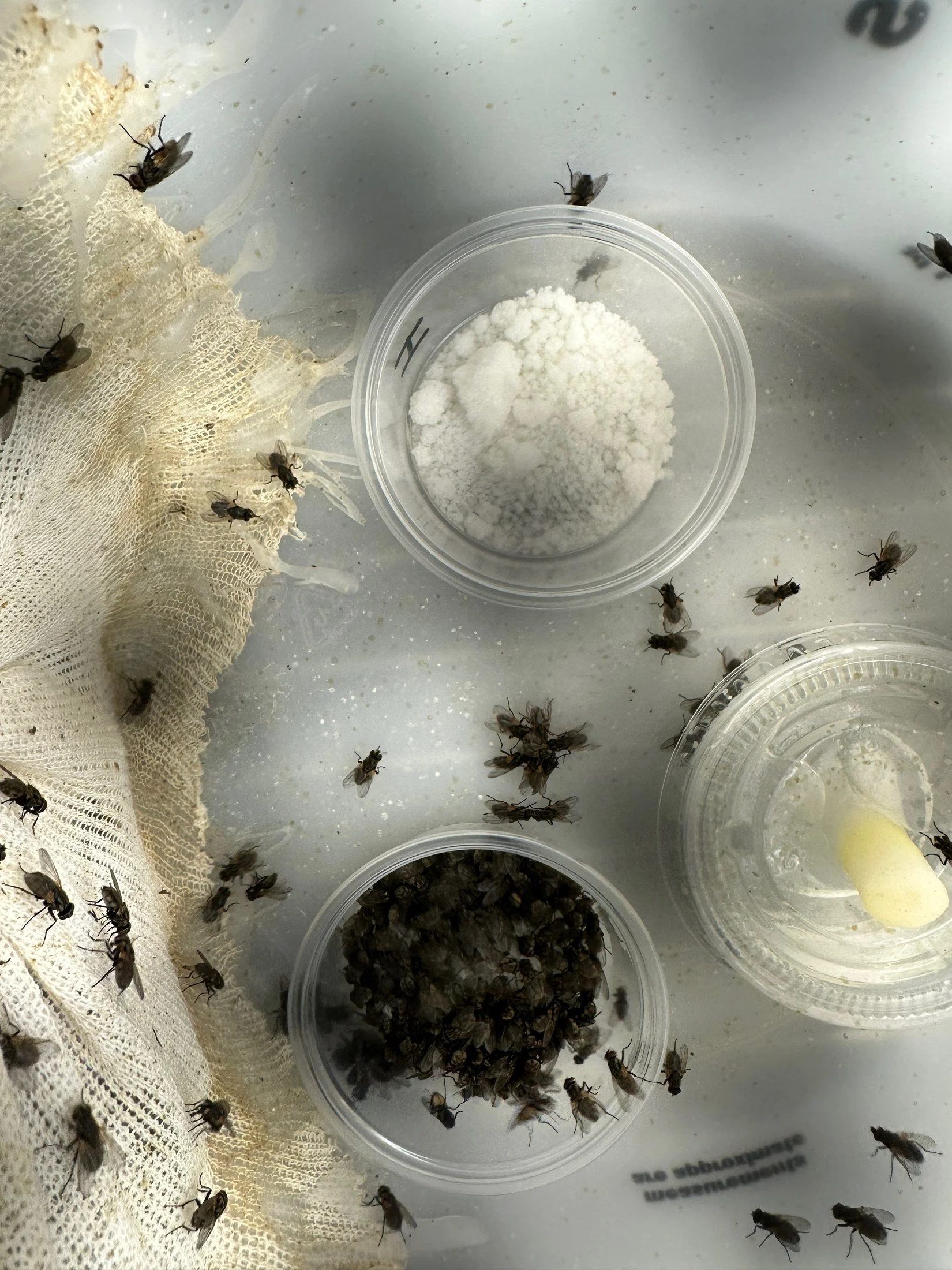
Published results
How feeding responses differ
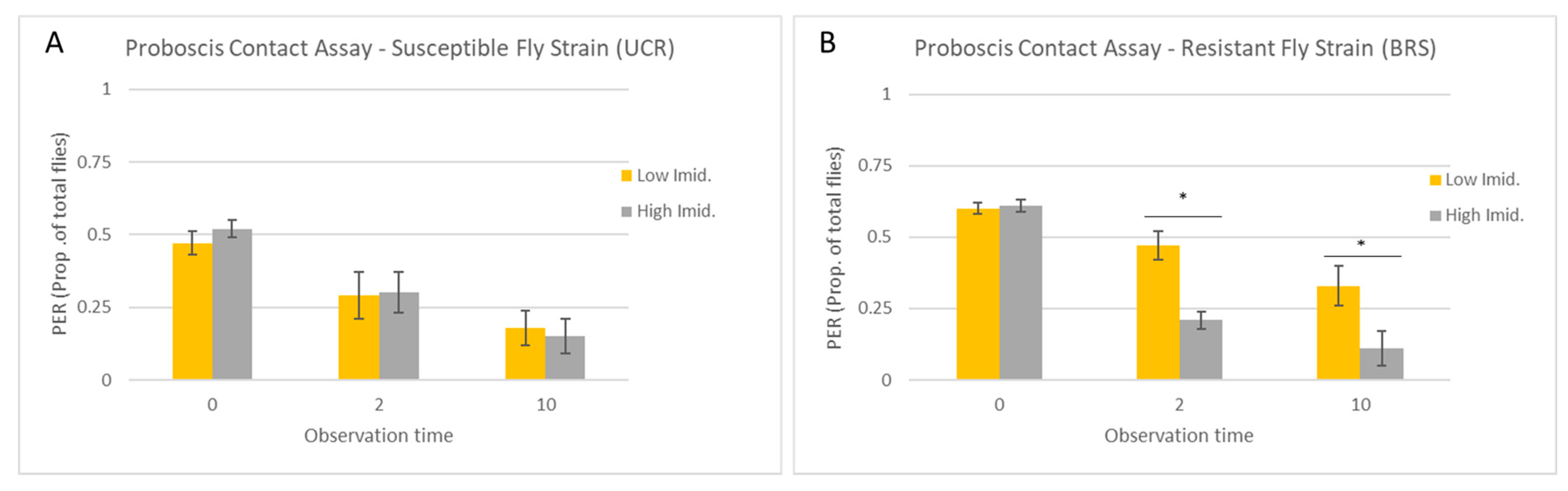
The resistant strain showed a stronger reduction in feeding response at the higher imidacloprid concentration; the susceptible strain did not show this concentration-dependent difference.
Figure 2 from D’Arco et al. (2024), Insects 15, 168. © the authors. CC BY 4.0. Reproduced unchanged.
Studies, publications & student involvement
Highlighted studies
Choice and no-choice assays that separate acceptance, avoidance, and exposure.
Published inheritance and stability of behavioral resistance in house flies.
Improved behavioral assays that complement conventional susceptibility testing.
Genetic and genomic approaches to resistance mechanisms and adaptation, described at the program level until results are published.
Selected public work
Student involvement: Students contribute to insect care, behavioral scoring, camera-based observation, assay development, data visualization, and literature synthesis.
02 / From laboratory to field
Attract-and-kill tools for pest flies
Research question: How can bait-based tools create reliable exposure under the variable conditions insects encounter outside the laboratory?
Current and developing studies examine attraction, feeding, bait presentation, placement, persistence, and pest movement around attract-and-kill systems. Laboratory screening is connected with semi-field and field studies so that delivery is evaluated alongside biological activity.
Why it matters: A strong active ingredient cannot perform if the target insect does not find, contact, or consume it. Improving delivery can make pest management more efficient, targeted, and useful in operational settings.
Studies, publications & student involvement
Highlighted studies
Attractive toxic sugar bait systems for house flies.
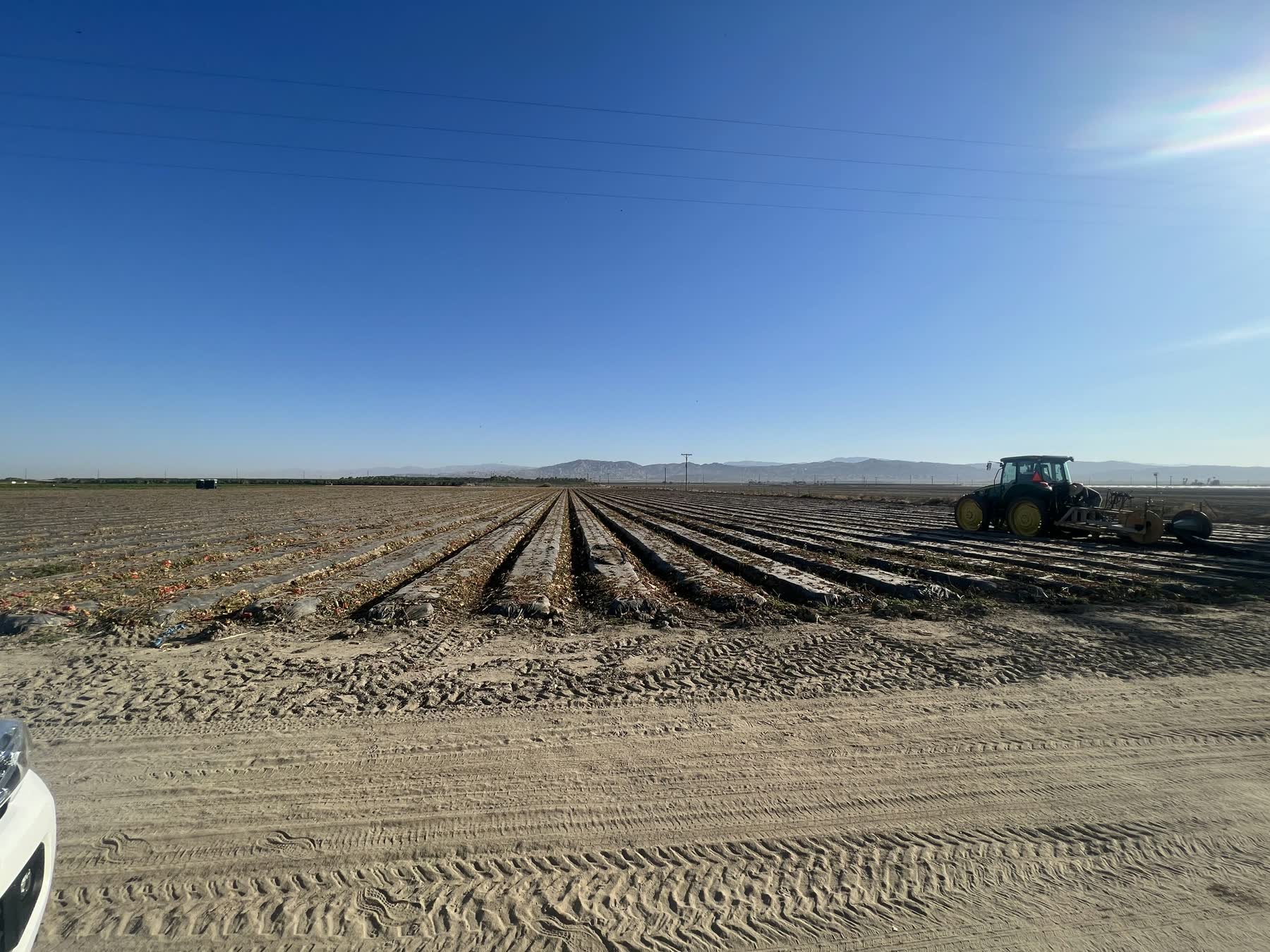
Bait presentation and delivery under warm, dry field conditions.
Laboratory observation of feeding, contact, and avoidance.
Semi-field and field validation of how placement and persistence shape exposure.
Broad comparison of bait formats for pest flies, without disclosing active-project formulations or results.
Student involvement: Students prepare assays, document feeding and movement, maintain experimental insects, conduct field observations, organize data, and present findings.
03 / Urban systems
Urban arthropod biology and sustainable management
Research question: How can life history, habitat use, and feeding behavior reveal better opportunities for urban pest management?
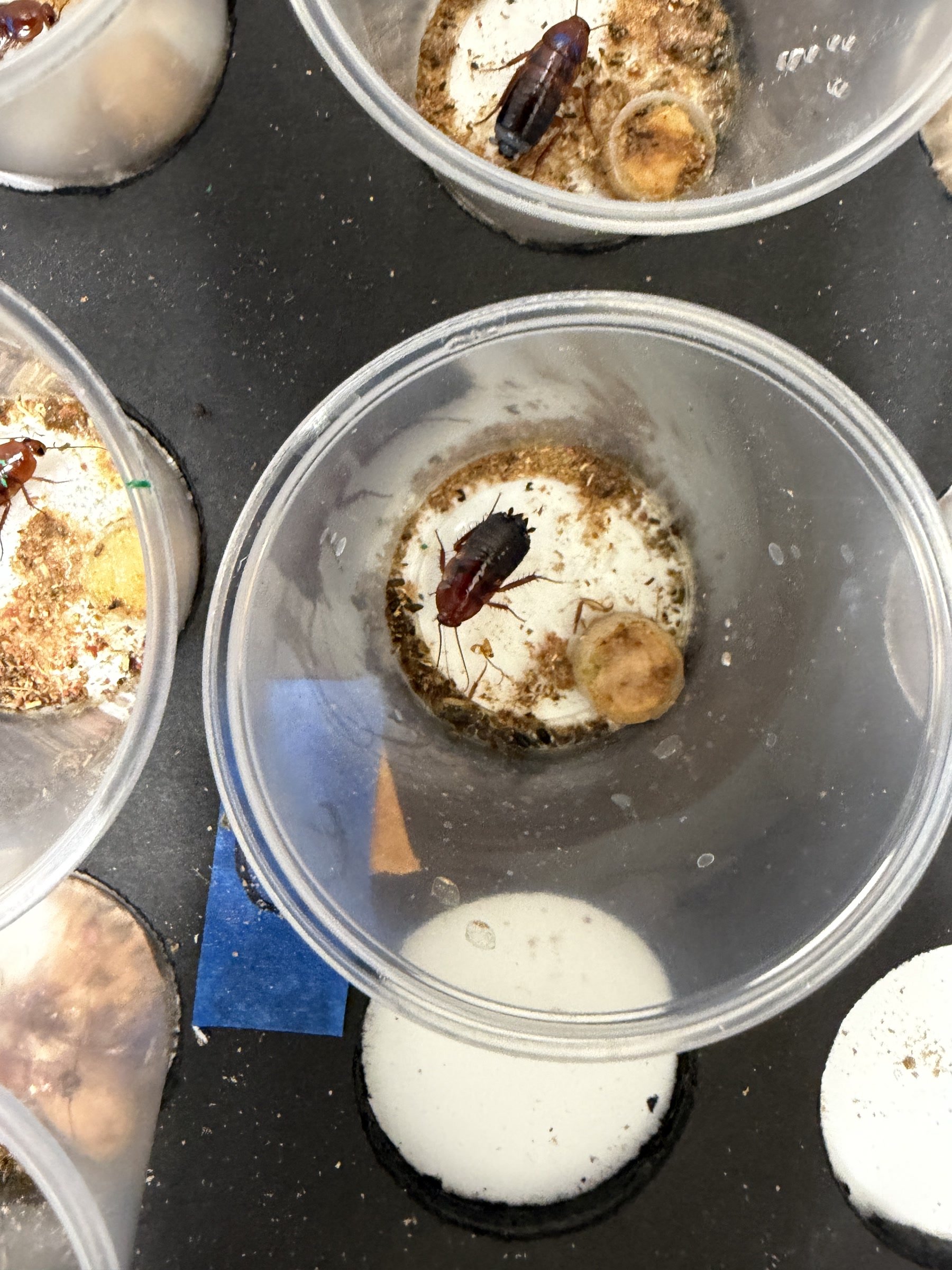
The lab studies Turkestan cockroach development, morphometrics, field ecology, and behavior-informed bait delivery. Related projects develop laboratory and field methods for other urban arthropods, including Arizona bark scorpions.
Why it matters: Life history and habitat use determine when and where management tools can reach an urban pest. Better biological information supports stronger monitoring, timing, and delivery decisions.
Published work: Isha Budha Magar’s study on Turkestan cockroach development and morphometrics was published in Insects on September 11, 2026. Read the paper · View the supporting dataset.
Published results
Development depends on research context
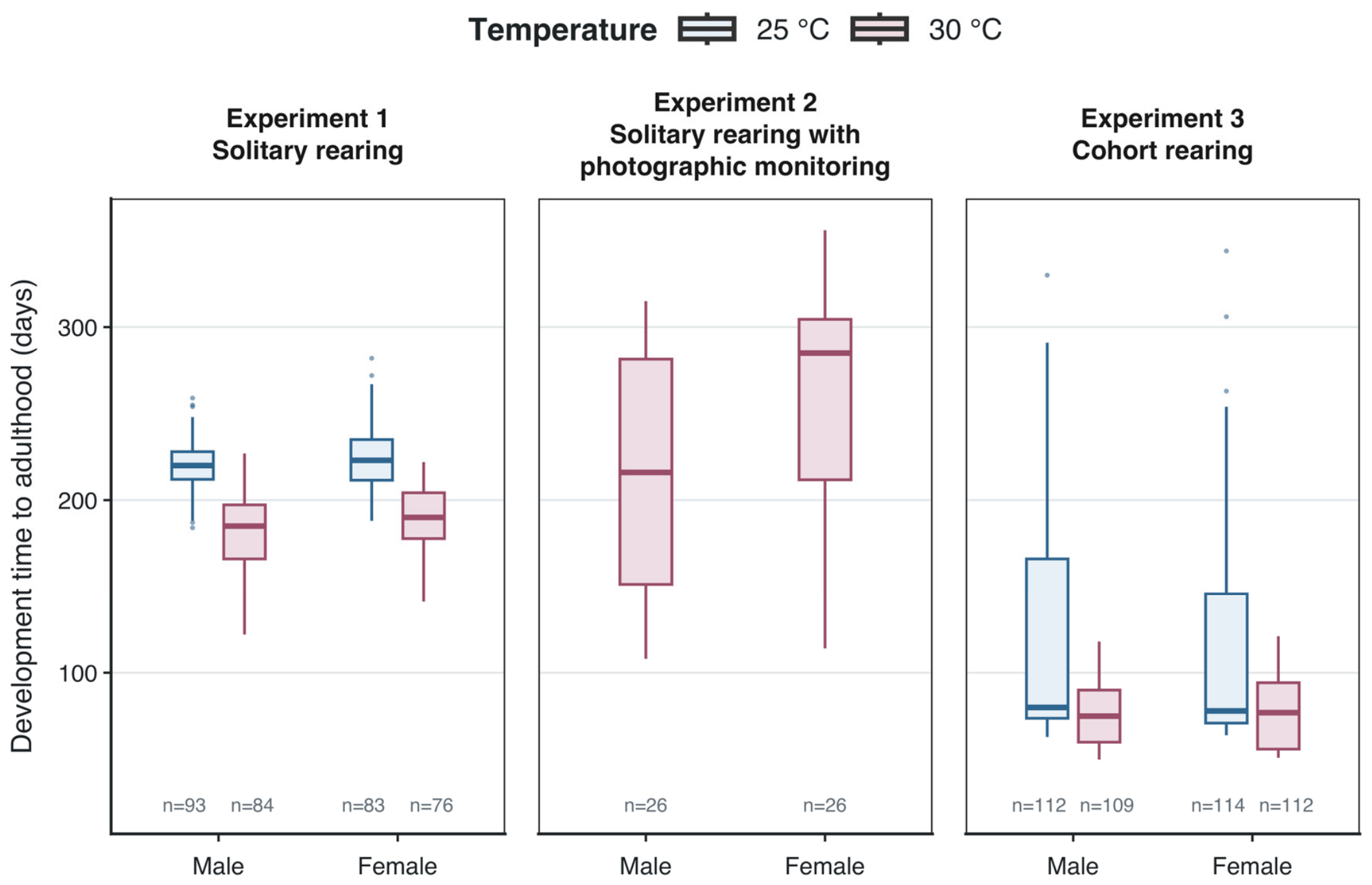
Turkestan cockroaches reached adulthood sooner under cohort than solitary rearing in this study. Because the protocols also differed in housing, handling, monitoring, and incubator conditions, the difference cannot be attributed solely to social contact.
Figure 6 from Budha Magar et al. (2026), Insects 17, 948. © the authors. CC BY 4.0. Reproduced unchanged.
Studies, publications & student involvement
Highlighted studies
Turkestan cockroach development and morphometrics under contrasting environmental and social conditions.
Urban habitat use and field monitoring in utility infrastructure.
Moisture-rich and behavior-informed bait formats.
Laboratory bioassay development for scorpion exposure and response.
Student involvement: Students participate in colony care, life-history measurements, morphometrics, microscopy, bait assays, field sampling, and scientific presentations.
04 / Animal health
Veterinary ectoparasites and animal response
Research question: How can ectoparasite pressure and animal response be measured together to improve management decisions?
Research examines biting flies affecting cattle, sustainable management of northern fowl mites, and methods that combine arthropod counts with direct behavioral observation and sensing technologies. Laboratory and field studies are designed to evaluate biological performance and practical use.
Why it matters: Arthropod counts do not always capture the full effect of an ectoparasite. Measuring animal response can reveal changes in disturbance, defensive behavior, and welfare that are directly relevant to producers and veterinarians.
Published results
Measuring mite control in the field
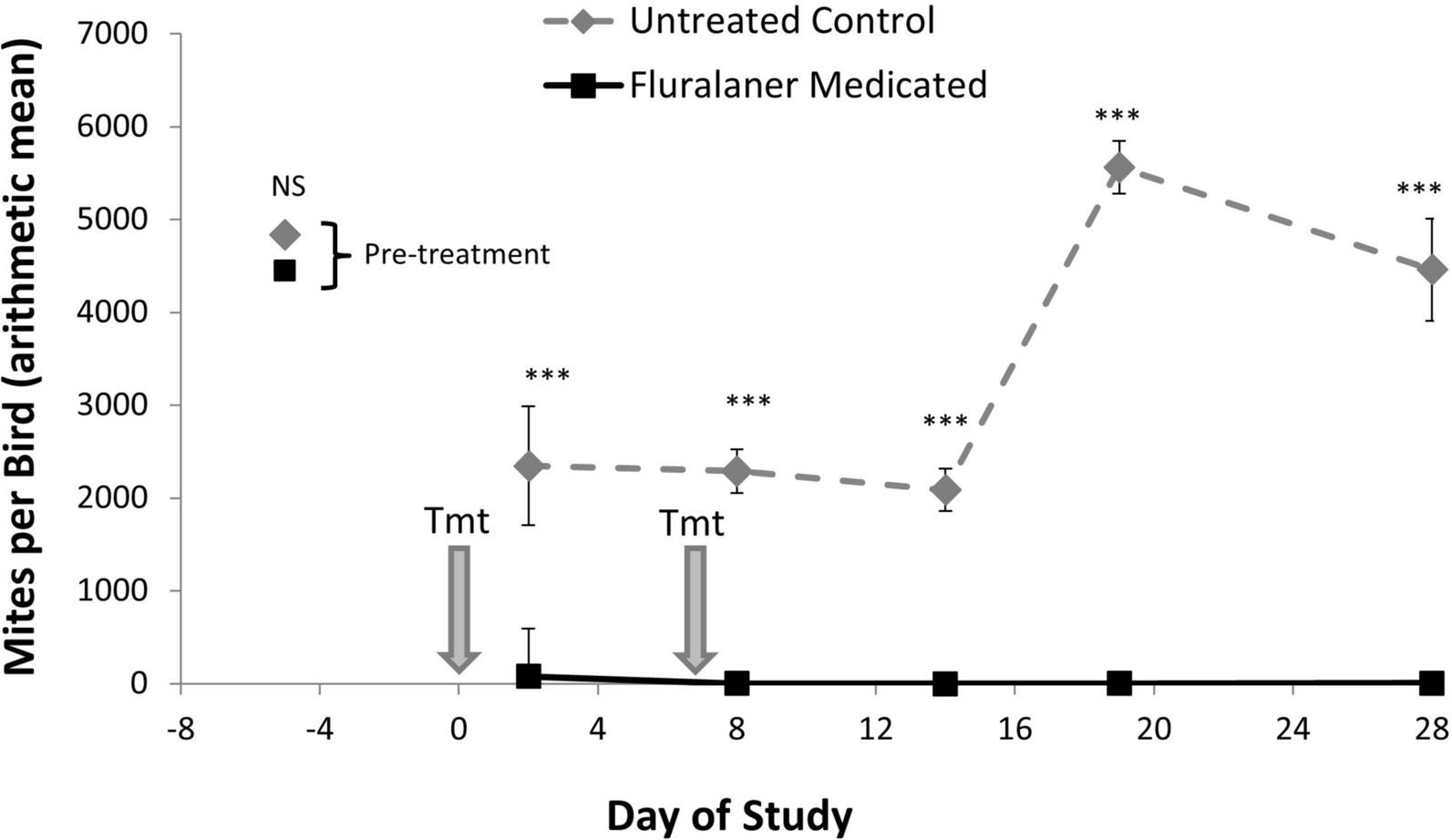
In a commercial-layer field trial, fluralaner-treated chickens had substantially fewer northern fowl mites than untreated chickens. Control efficacy exceeded 99% from day 8 through day 28.
Figure 4 from Gerry et al. (2026), Parasites & Vectors 19, 81. © the authors. CC BY 4.0. Reproduced unchanged.
Studies, publications & student involvement
Highlighted studies
Biting-fly pressure and cattle defensive behavior.
Wearable and remote sensing approaches for animal response.
Published work on northern fowl mite management in poultry.
Sustainable and non-conventional approaches for veterinary ectoparasite management.
Field studies that connect efficacy, animal response, and operational use.
Selected public work
Student involvement: Students assist with behavioral video, sensor workflows, arthropod identification, field observations, data management, and communication with research and Extension audiences.
05 / Extension and preparedness
New World screwworm preparedness
Research question: How can surveillance, identification, training, and communication strengthen regional readiness for New World screwworm?
The lab contributes to adult identification and reporting resources, surveillance and trapping, specimen workflows, stakeholder workshops, and response-oriented training.
Why it matters: Preparedness depends on recognition, reporting, surveillance, and coordination before a suspected case becomes a larger animal health problem.
Studies, publications & student involvement
Highlighted studies and activities
Illustrated adult identification and commonly confused species resources.
Surveillance and trapping support with state and federal partners.
Sample collection, specimen handling, and identification workflows.
Workshops for Extension professionals, producers, animal health personnel, and other audiences.
Practical communication resources that connect current agency information with local preparedness.
Adult New World screwworm identification and commonly confused species
Student involvement: Students can gain experience in identification, microscopy, surveillance concepts, specimen handling, educational material development, and public communication.
06 / Applied entomology
Secondary screwworm and blow fly research
Research question: How can research on secondary screwworm and other blow flies inform biological control, behavior, and selected preparedness questions?
We study biological control of the secondary screwworm, Cochliomyia macellaria (Fabricius, 1775), to inform selected questions relevant to New World screwworm preparedness. Related work examines adult feeding and movement, experimental methods, and blow fly behavior.
Why it matters: Secondary screwworm provides a relevant research system for questions that can strengthen methods, student training, and future applied work without presenting it as New World screwworm itself.
Studies, publications & student involvement
Highlighted studies
Screening pupal parasitoids for biological control of secondary screwworm.
Adult feeding and movement in blow flies.
Laboratory method development for applied blow fly research.
Semi-field study directions that can connect laboratory observations with animal and livestock environments.
Student involvement: Students participate in colony care, parasitoid studies, behavioral observation, microscopy, study design, data organization, posters, and presentations.
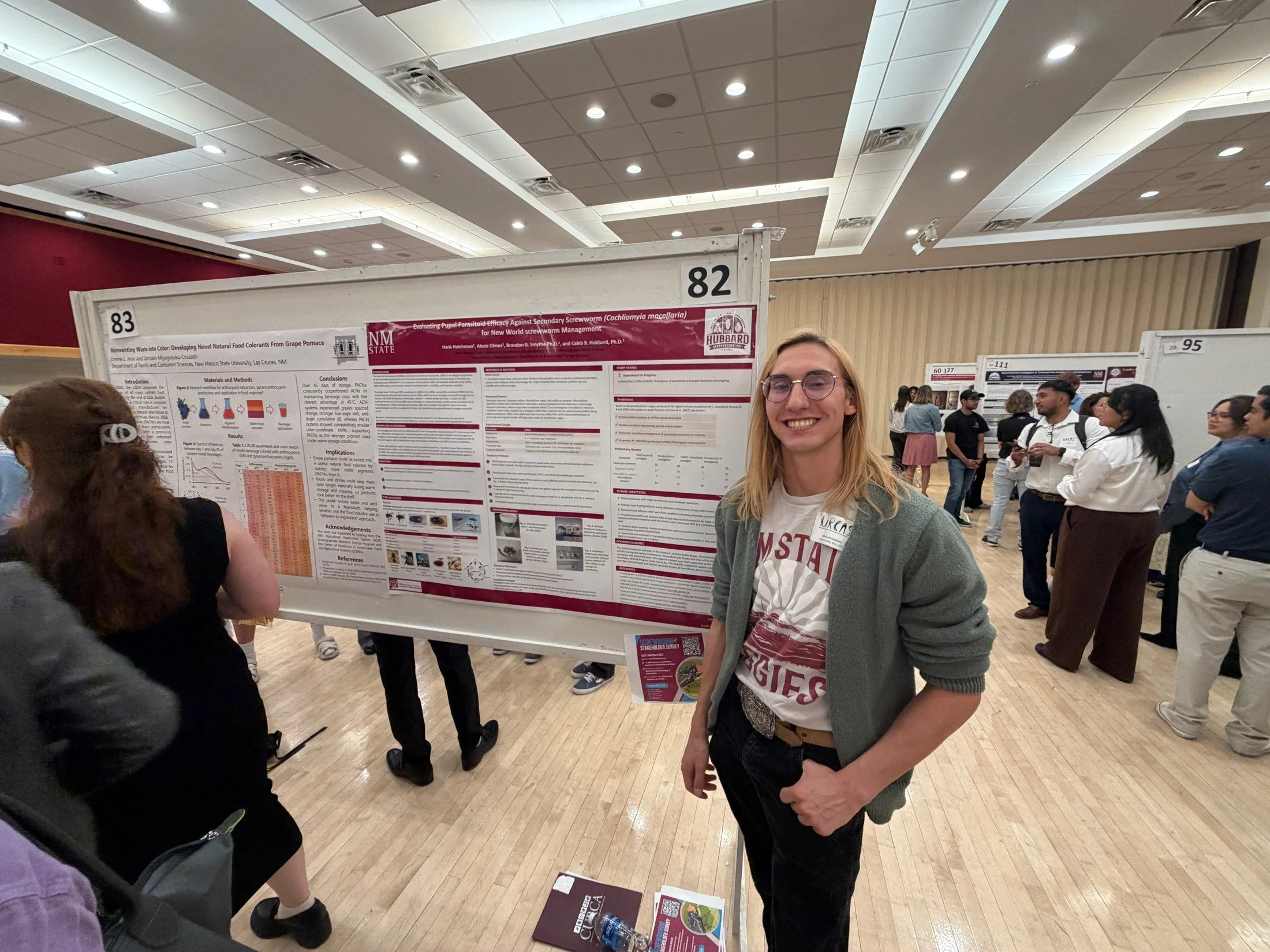
Public highlight: Hank R. Hutcheson presented his work on pupal parasitoids and secondary screwworm at NMSU's 2026 Undergraduate Research and Creative Arts Symposium.
People behind the research
Research in practice
Explore student research at New Mexico State University and photographs from Dr. Hubbard’s earlier work at UC Riverside.
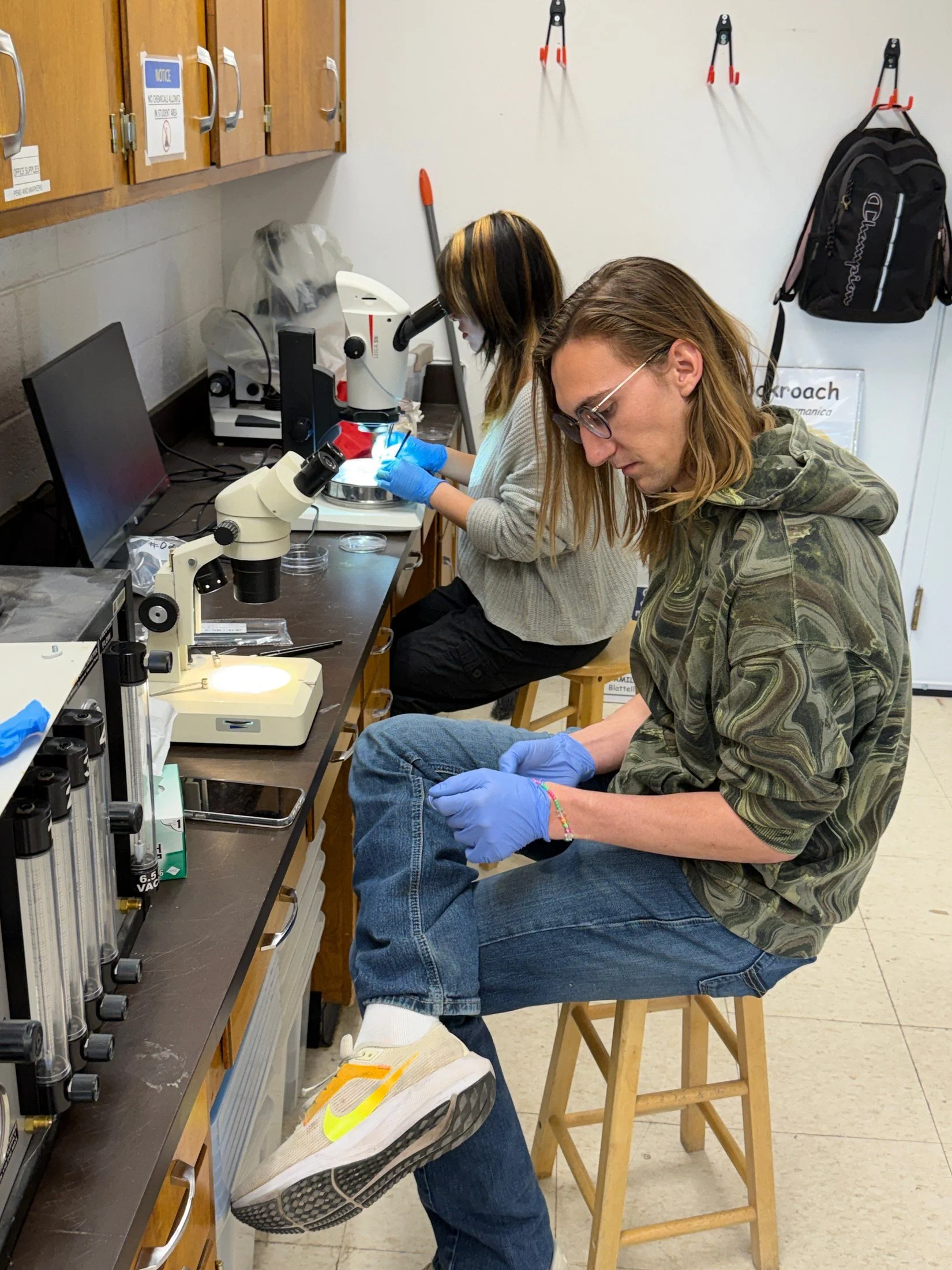
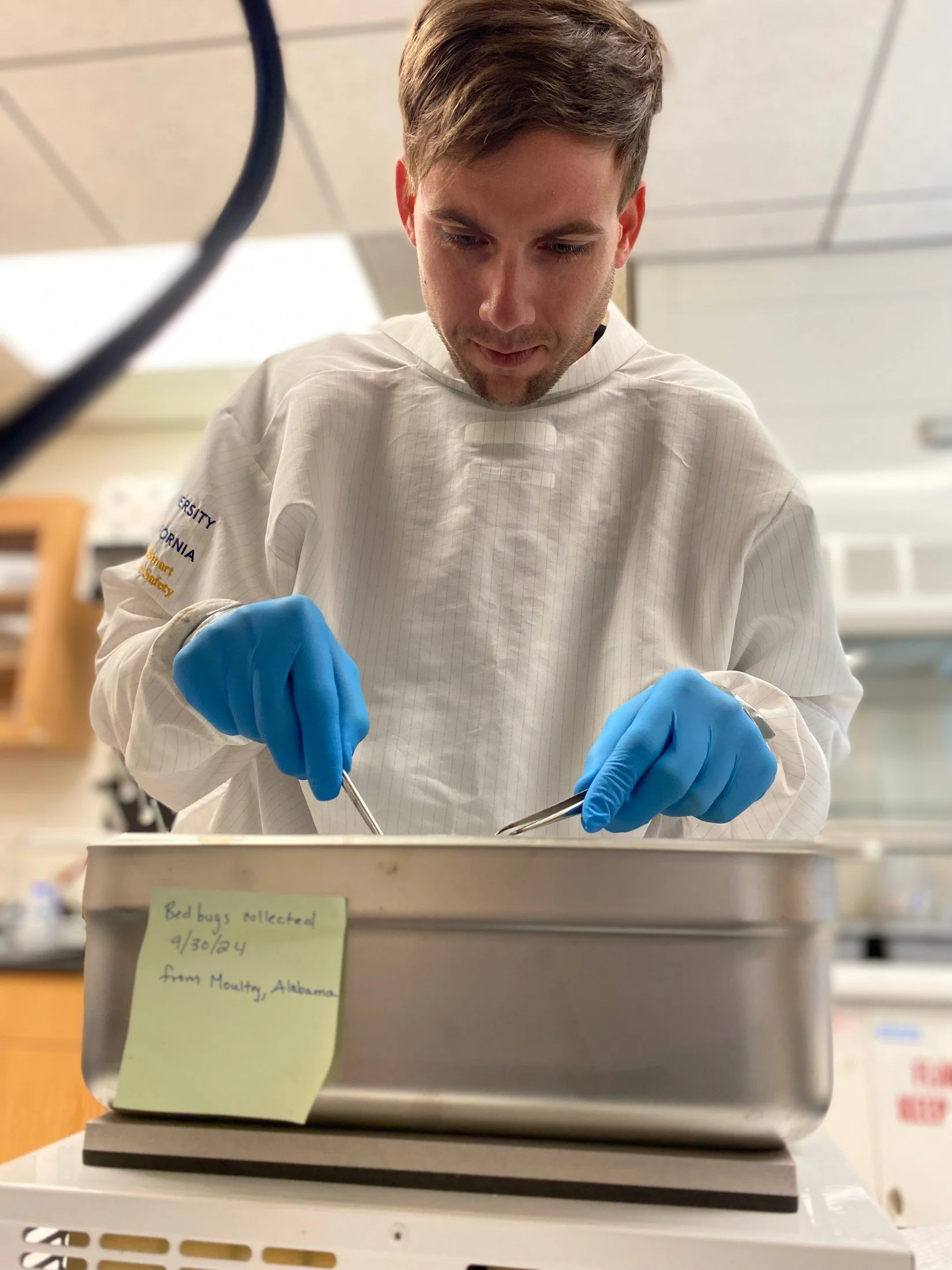
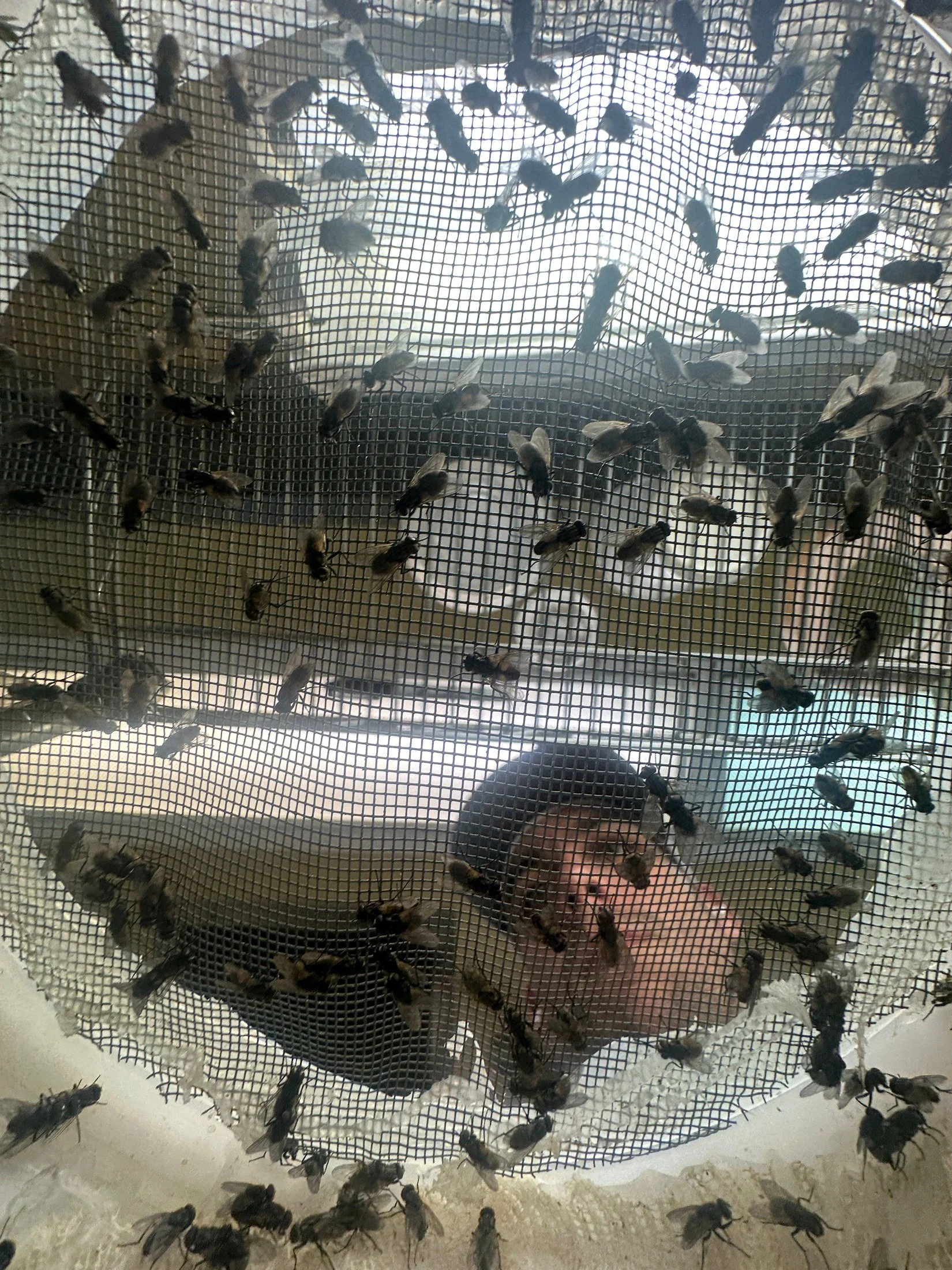
Select a photograph to view it full size in a new tab.
Questions that matter beyond the laboratory
Our projects are connected by a common goal: identify the biological reason behind a pest management problem, then develop evidence that can improve a real decision.