From resistance mechanisms to field-ready pest management.
Why pest management tools succeed or fail
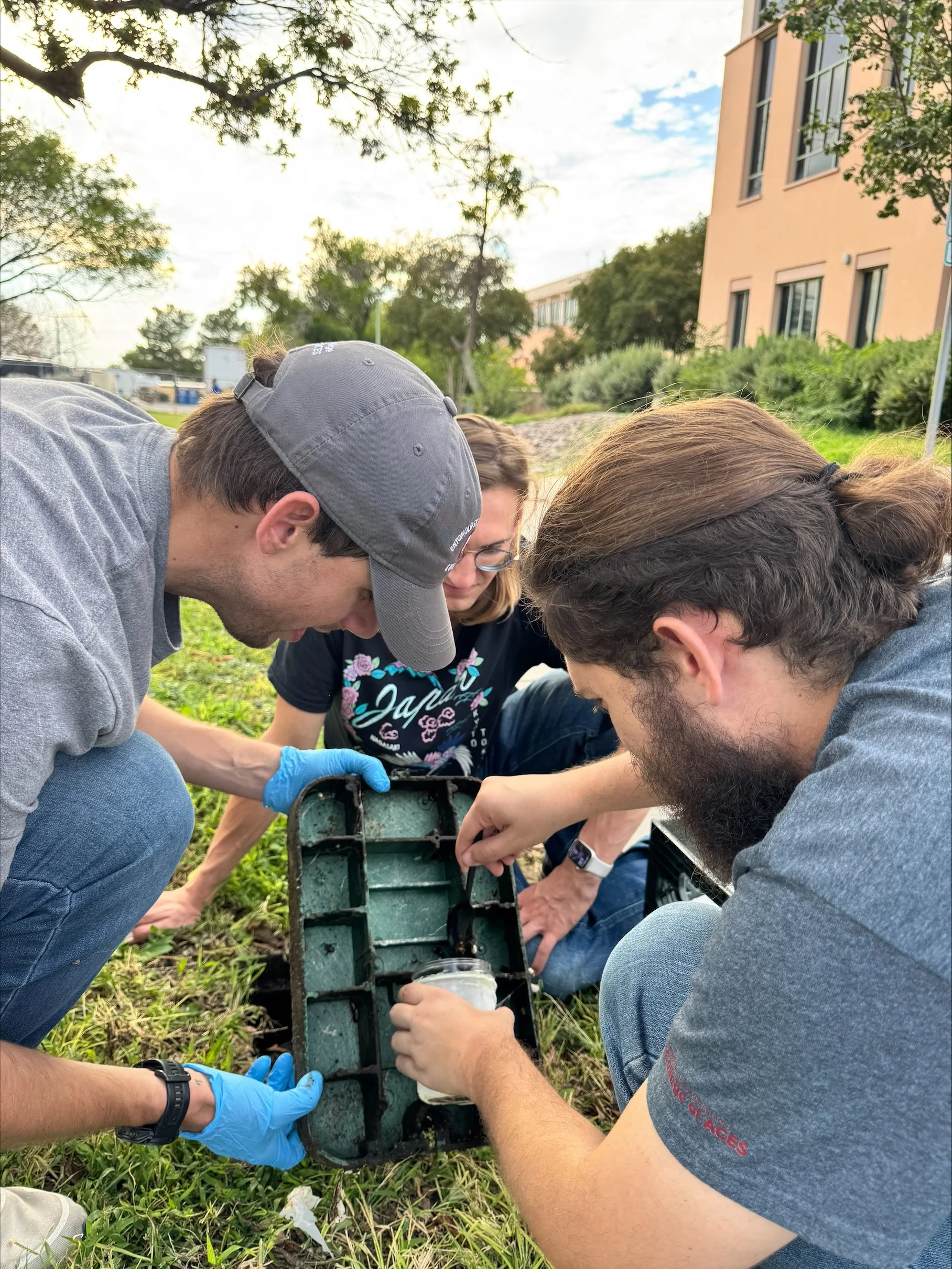
The Hubbard Lab works at the intersection of urban and One Health entomology. We combine insect behavior, genetics and genomics, field research, animal response, and Extension to build sustainable integrated pest management strategies that protect people and animals.
A control tool can fail because an insect avoids it, because exposure is incomplete, or because a promising treatment loses effectiveness under field conditions. We connect mechanism, delivery, validation, and Extension so that pest management decisions are built on evidence that holds up beyond the laboratory.

Behavioral resistance and adaptation
We investigate how behavior, inherited traits, and physiological response shape an insect's interaction with pest management tools.

Attract-and-kill tools for pest flies
We study how attraction, feeding, placement, and persistence determine whether bait-based tools create reliable exposure.

Urban arthropod biology and sustainable management
We connect life history, habitat use, and feeding behavior with practical management of cockroaches, scorpions, and other urban arthropods.
Veterinary ectoparasites and animal response
We pair arthropod measurements with animal behavior and sensing to improve management decisions in livestock and poultry systems.
New World screwworm preparedness
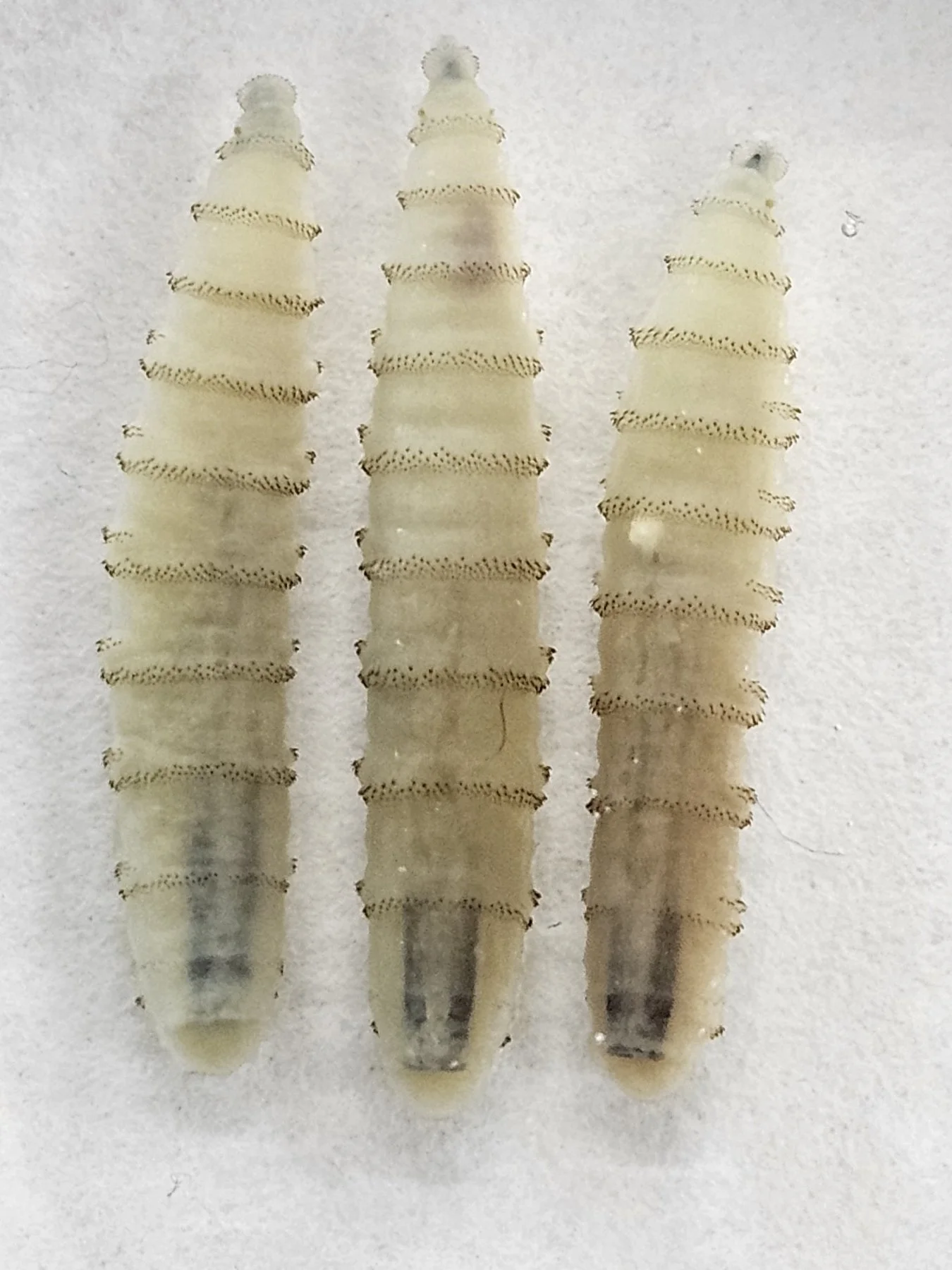
We contribute to identification resources, surveillance and trapping, stakeholder training, specimen workflows, and response preparedness.
Secondary screwworm and blow fly research
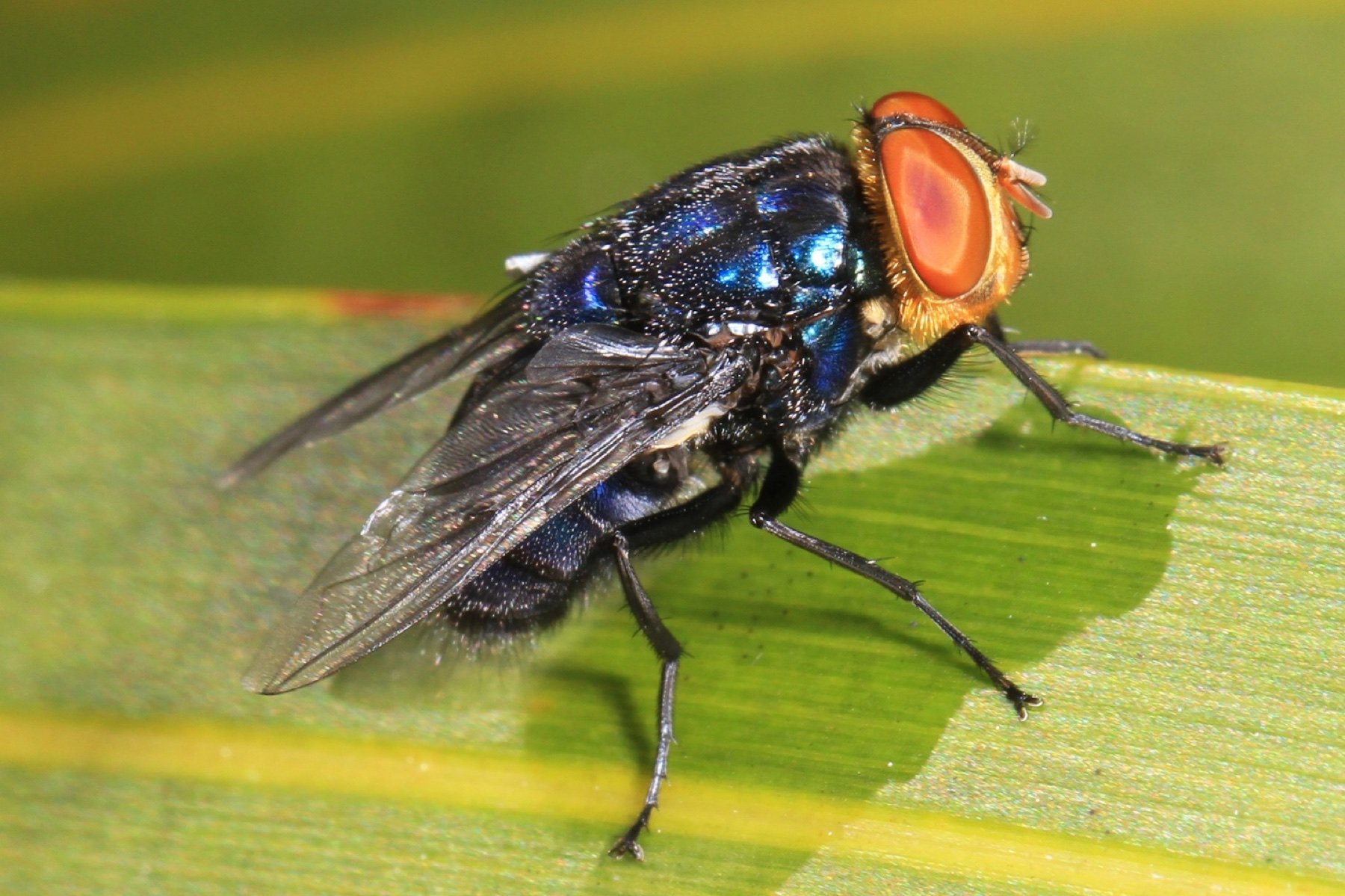
We study blow fly behavior and biological control of secondary screwworm, Cochliomyia macellaria, to inform selected questions relevant to New World screwworm preparedness.
Science and training for New World screwworm preparedness
New World screwworm, Cochliomyia hominivorax, is an important animal health threat that requires accurate identification, rapid reporting, coordinated surveillance, and informed response. Our work connects research, Extension, and training to help producers, animal health professionals, students, and communities prepare.
Images from NMSU Extension Guide A-156. Adult photo by Judy Gallagher. Larvae photo courtesy of Sohath Zamira Yusseff-Vanegas, USDA ARS.